MedIntegrity TA-100 Manufacturer & Supplier
TOC Analyzer TA-100
Overview
Designed and manufactured by MedIntegrity LLC — the TOC analyzer is built in our own factory, part of a 28-patent product line in pharmaceutical testing equipment.
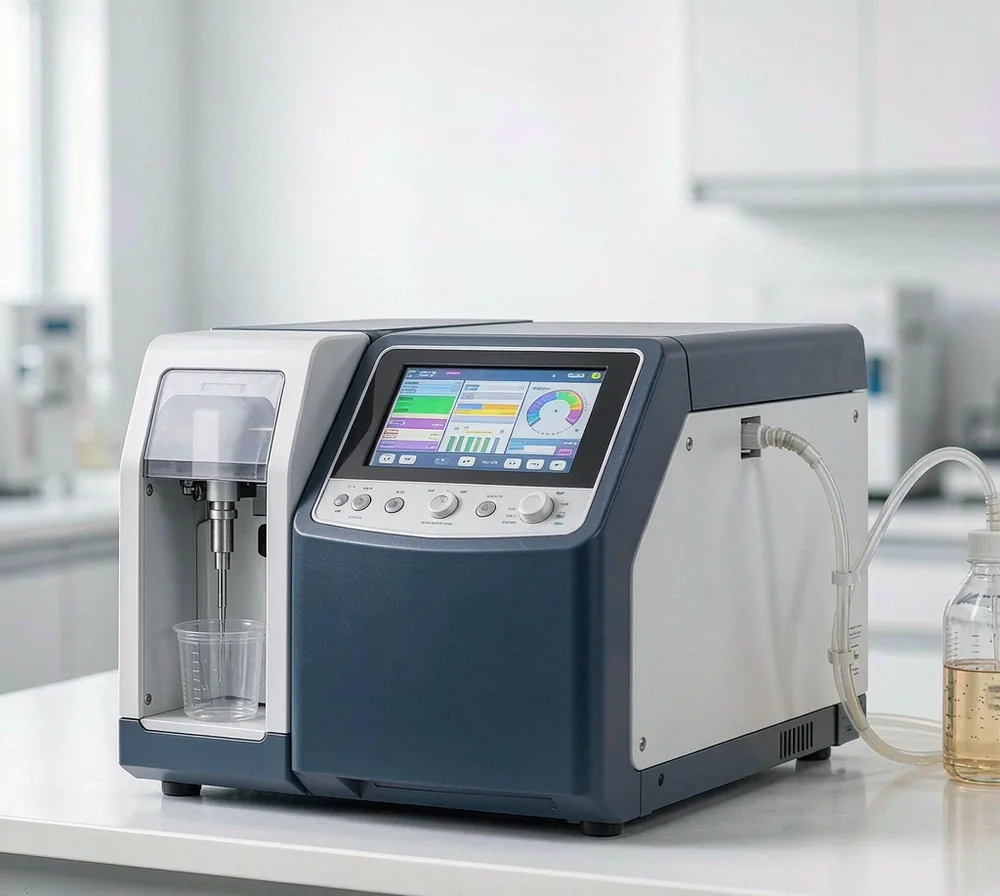
MedIntegrity TOC Analyzer TA-100 Establishing a reliable Water Quality Measure & Control StrategyMedIntegrity TOC Analyzer TA-100 features outstanding sensitivity and can accurately measure low concentration TOC. The analyzer is capable of detecting almost all conditions developed in accordance with GAMP guidelines, and offering full compliance with 21 CFR Part 11 is supported by an extensive qualification documentation package, including guides for Installation and Operational Qualification Performance Qualification IQ/OQ/PQMedIntegrity Total organic carbon (TOC) is often used as a non-specific indicator of water quality. In the natural process of our environment and the man-made processes of industry the ubiquitous nature of carbon provides a screening tool to determine the status of water quality. Customers need a reliable TOC system that can determine contamination from natural occurring compounds, man-made compounds, viruses, bacteria or biological growth. Total Organic Carbon analyzers determine the amount of total carbon in a sample aliquot. Total Organic Carbon is comprised of an Inorganic (TIC) and Organic fraction. The Inorganic fraction consists of the carbonate and bicarbonate compounds. In order to make an accurate determination of the Organic fraction, the analyzer must remove, or quantify, the Inorganic fraction of the sample aliquot. Applications: Drinking Water: TOC monitoring is critical for assessing the effectiveness of water treatment processes and controlling disinfection byproducts. Wastewater: TOC is used to evaluate organic pollution and treatment efficiency. Environmental Monitoring: TOC measurements are used to assess the health of aquatic ecosystems. Standard Methods 5310C: TOC Determination by Persulfate-Ultraviolet Oxidation Method
Technical Specifications
| Power Requirements | AC100~260V,50/60Hz |
|---|---|
| Consumption | 120W |
| Measuring range | 0~1000mg/L(Extensible) |
| Response Time | Within 4mins |
| Detection Limit | 5μg/L |
| Maximum Salinity | 85 g/L |
| Nitrogen | 99.995% |
| Reproducibility | 3% |
| History Function | ≥5 Years storage |
| Instrument Dimensions | 430 mmx455mmx440mm |
Specifications subject to change for improvement without notice. For the latest data sheet or technical questions, contact your MedIntegrity representative.
In practice, the TA-100 measures 0~1000mg/L(Extensible), with a 5μg/L detection limit, and a full read in Within 4mins. Short enough for routine water checks, and the electronic record keeps the audit trail clean. Send us your water matrix and we'll confirm the fit.
Technical Documentation
Notes From Our Technical Documentation
Model Information & Basic Features
Model:TA-100 Colourful Touch Screen DATA Developed in accordance with GMP and offering full compliance with 21 CFR Part 11 and ensure Data Integrity.Output of measurement data to USB memory sticks or conventional PC printer.Space-saving and energy-saving design.A wealth of options, including sea water sample measurement and compatibility with small samples volumes
Technical Guide
A TOC instrument for the wider water question
Not every water program lives at the 1 ppb level. Drinking water treatment, wastewater, and environmental monitoring work at higher concentrations, with higher salinity, and with the need to see what is happening across a range rather than at the bottom of a scale. The MedIntegrity TA-100 is the TA series instrument for that range: a measuring range of 0 to 1000 mg/L (extensible), a detection limit of 5 µg/L, and a maximum salinity tolerance of 85 g/L — the working envelope for water that is not pharmaceutical pure and is not going to be.
The response time is within 4 minutes, the reproducibility is 3%, and the instrument runs on a 99.995% nitrogen supply. History storage is five years or more, and the electronic record is part of the instrument from the first run.
The method behind the number
The TA-100 follows the persulfate-ultraviolet oxidation route as defined in Standard Method 5310C: the sample is exposed to UV in the presence of persulfate, organic carbon is oxidized to CO2, and the result is read as the total organic carbon content. The method is the one the water community recognizes, which means the numbers you generate are comparable to the numbers your regulators, your treatment partners and your own historical data are already written in.
That comparability is the quiet value of the instrument: a TOC program is only as useful as the consistency of its numbers over time, and a recognized method is the foundation of that consistency. The instrument is developed in accordance with GMP and offers full compliance with 21 CFR Part 11, with data integrity at the center of the design — the measurement data outputs to USB memory or a conventional PC printer, so the record leaves the instrument in the form your system needs.
Space, energy, and the options
The design is space-saving and energy-saving — a footprint and a power draw that let the instrument sit at the sampling point rather than in a dedicated room. The dimensions are 430 × 455 × 440 mm, and the power requirement is AC 100–260 V at 50/60 Hz (120 W).
The options list is where the TA-100 earns its place in mixed programs: sea water sample measurement is supported, and the instrument is compatible with small sample volumes — the two cases that typically break a standard TOC setup and force a workaround. When the program needs to see both a pharmaceutical loop and a municipal source on the same instrument family, those options are what keep it on one platform.
A method the numbers already speak
A TOC program is only as useful as the consistency of its numbers over time, and the Standard Method 5310C persulfate-ultraviolet oxidation route is what the water community recognizes for that purpose. The TA-100 follows the method as written — UV in the presence of persulfate, organic carbon oxidized to CO2, read as the total organic carbon content — which means the numbers you generate are comparable to the numbers your regulators, your treatment partners and your own historical data are already written in. That comparability is quiet but it is the foundation of the program.
The working envelope is the one that distinguishes the TA-100 in the family: a measuring range of 0 to 1000 mg/L (extensible), a detection limit of 5 µg/L, and a maximum salinity tolerance of 85 g/L. That is water that is not pharmaceutical pure and is not going to be — drinking water treatment, wastewater, and the higher-salinity end of environmental monitoring — and the 4-minute response time with 3% reproducibility keeps the sampling routine on schedule at that scale.
Options that keep the program on one platform
Mixed programs break standard TOC setups in two predictable places: sea water samples, and small sample volumes. Both are options on the TA-100, and that is where the instrument earns its place in a program that has to see both a pharmaceutical loop and a municipal source on the same family — one platform, one record format, instead of a workaround for every exception the program throws.
The design stays out of the way of the program: a space-saving, energy-saving footprint that sits at the sampling point rather than in a dedicated room, with a power requirement of AC 100–260 V at 50/60 Hz. History storage of five years or more and data output to USB memory or a conventional PC printer keep the record with the instrument, and the GMP development with 21 CFR Part 11 compliance keeps the data integrity at the center of the design rather than bolted on afterward.
The regulatory list behind the method
The persulfate-ultraviolet oxidation route the TA-100 follows is not only Standard Method 5310C — it is the same chemistry that EPA Method 415.3 specifies for TOC determination, and the method ISO 8245 describes for TOC in water. When the method is the one the agencies and the international standard all write around, the numbers it produce sit inside a framework your regulators already read, which is what keeps a TOC program defensible across a site and across a regulatory review.
That is the wider-water side of the instrument's value: under the Clean Water Act, TOC monitoring can be part of discharge permits and water quality assessment, and under the Safe Drinking Water Act it is a regulated parameter for treatment and disinfection byproduct control. A method that speaks all of those languages at once is the reason the TA-100 holds the wide-range end of the family.
Frequently Asked Questions
What is the measuring range?
0 to 1000 mg/L (extensible), with a detection limit of 5 µg/L and a maximum salinity tolerance of 85 g/L.
What method does it follow?
Persulfate-ultraviolet oxidation per Standard Method 5310C — the recognized method for TOC in water, so the results are comparable across your program and your historical data.
Can it handle sea water?
Yes — sea water sample measurement is one of the instrument's options, alongside compatibility with small sample volumes.
What are the dimensions and power?
430 × 455 × 440 mm, AC 100–260 V at 50/60 Hz, 120 W consumption. Response time within 4 minutes, reproducibility 3%.
How is the data handled?
History storage of five years or more on the instrument, with measurement data output to USB memory or a conventional PC printer. Developed in accordance with GMP, 21 CFR Part 11 compliant, with data integrity by design.
Does the TA-100 support the USP <43> three-stage determination of purified water?
See the specification table above for this model's applicability; we'll confirm fit for your water system.
Is it suitable for pharmaceutical water systems?
Yes — TOC analysis for pharmaceutical water and process water, from routine monitoring to system qualification.
Which pharmacopeial standards are covered?
USP, JP and ChP water-testing requirements, with model-by-model applicability listed in the specification table above.
Need a quote or technical advice?
Tell us your application — our U.S. team responds with product selection, documentation and pricing.
Request a Quote