Packaging Leak Tester Manufacturer & Supplier
Seal and leak integrity testing for pharma packaging — blister, pouch, sachet and rigid containers with traceable electronic records.
Overview
Manufacturer & U.S. supplier. MedIntegrity designs and builds the packaging leak tester in its own factory — 28 patented products, 15 years in pharmaceutical testing equipment.
Where Packaging Leak Tester Is Used
Vials, ampoules & syringes
Vacuum-decay leak detection on liquid-filled and lyophilized vials, ampoules, empty and prefilled syringes — the MFT series detects leak rates down to as low as 2 µm depending on the package specification.
Blister, pouch & sachet
Seal and leak integrity for flexible pharma packaging, with the result as a number against an acceptance limit instead of a visual call.
Release & in-process
Because the method is non-destructive and quantitative, the same instrument serves method development, in-process checks and lot release — one documented method set.
Going Deeper
The package is the last barrier
Once the product is filled, the package is what protects it. A stoppered vial is welded glass plus a compression-fit stopper. A blister is a thin film of polymer. A pouch is a sealed laminate. And each of them fails in a different way. A visual call on the seal is not a test. What the program needs is a method that turns package integrity into a number.
Vacuum decay, ASTM F2338
The MFT series runs ASTM F2338 vacuum decay. The package is sealed into a test volume, the volume is brought to a set level, and the instrument converts the rate of pressure change into a leak rate you can read. You compare that number to the acceptance limit you set during validation. No dye. No destruction. The vial that passes on your bench is the vial that goes on the line.
Choosing the right MFT
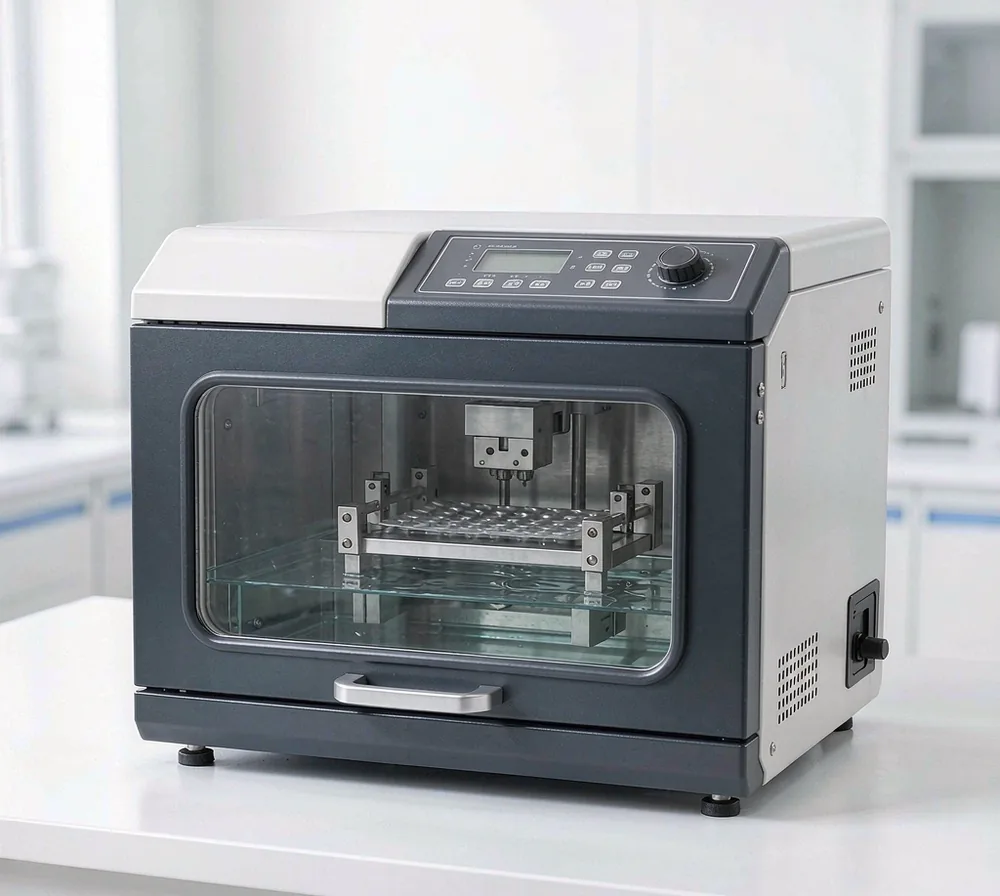
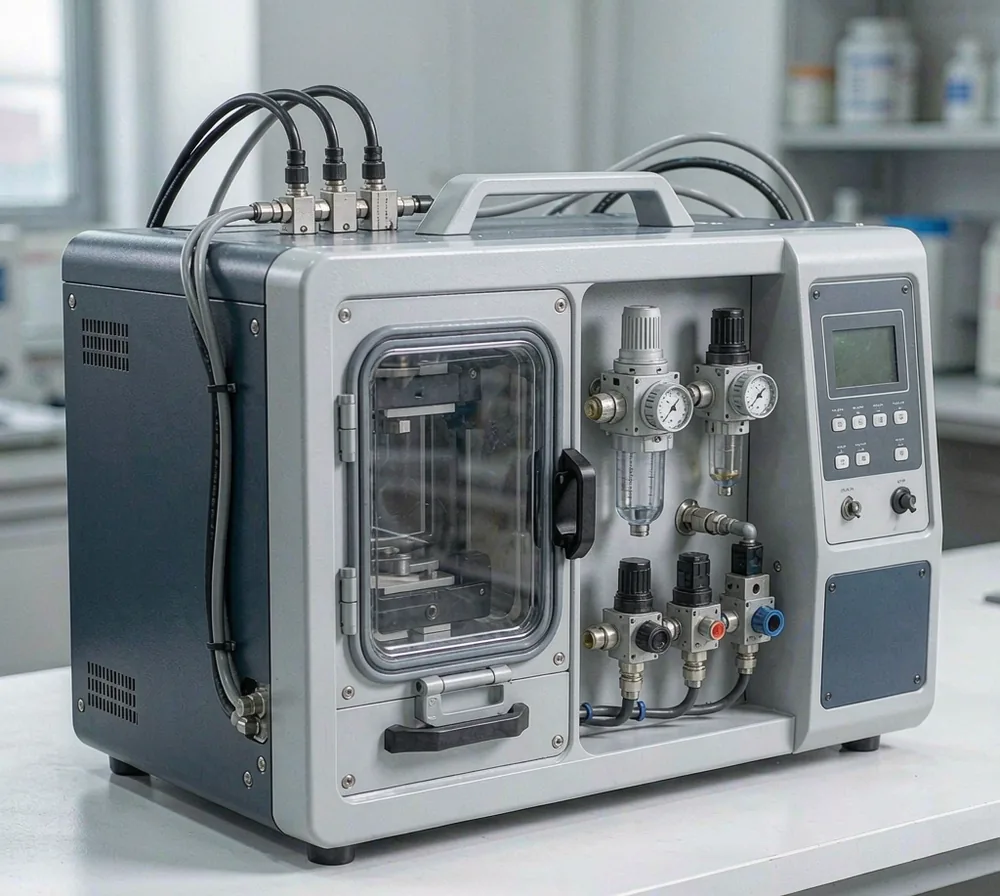
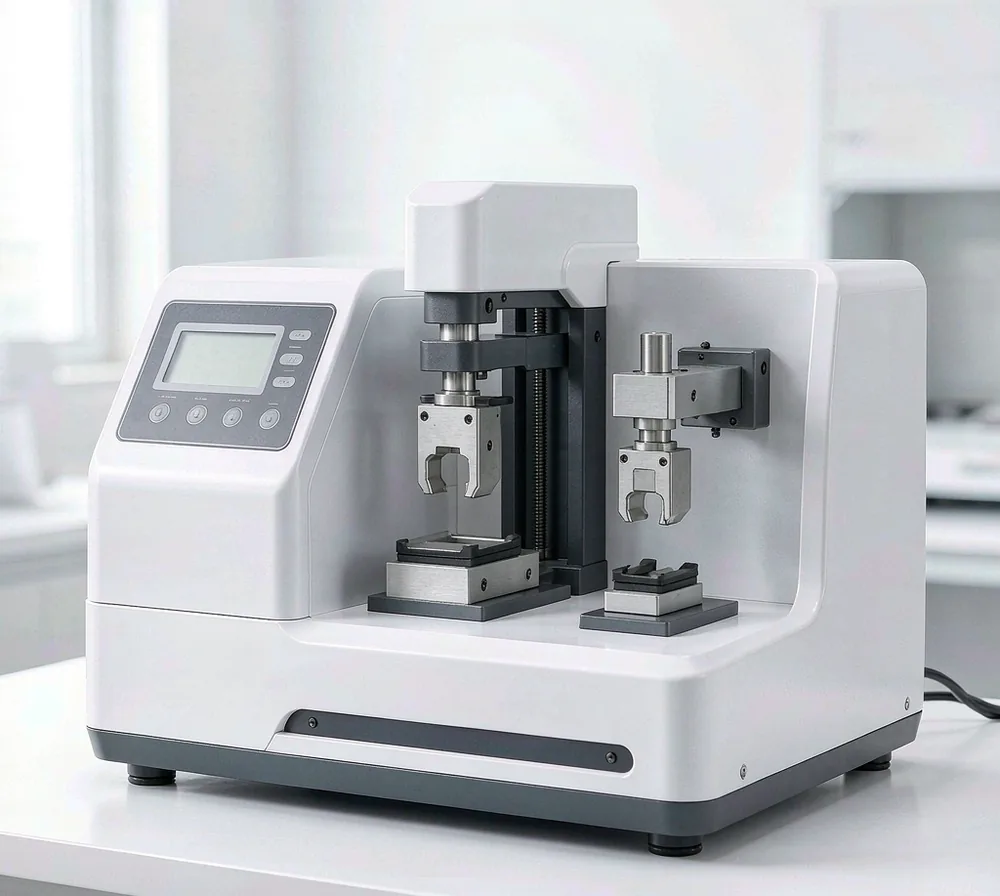
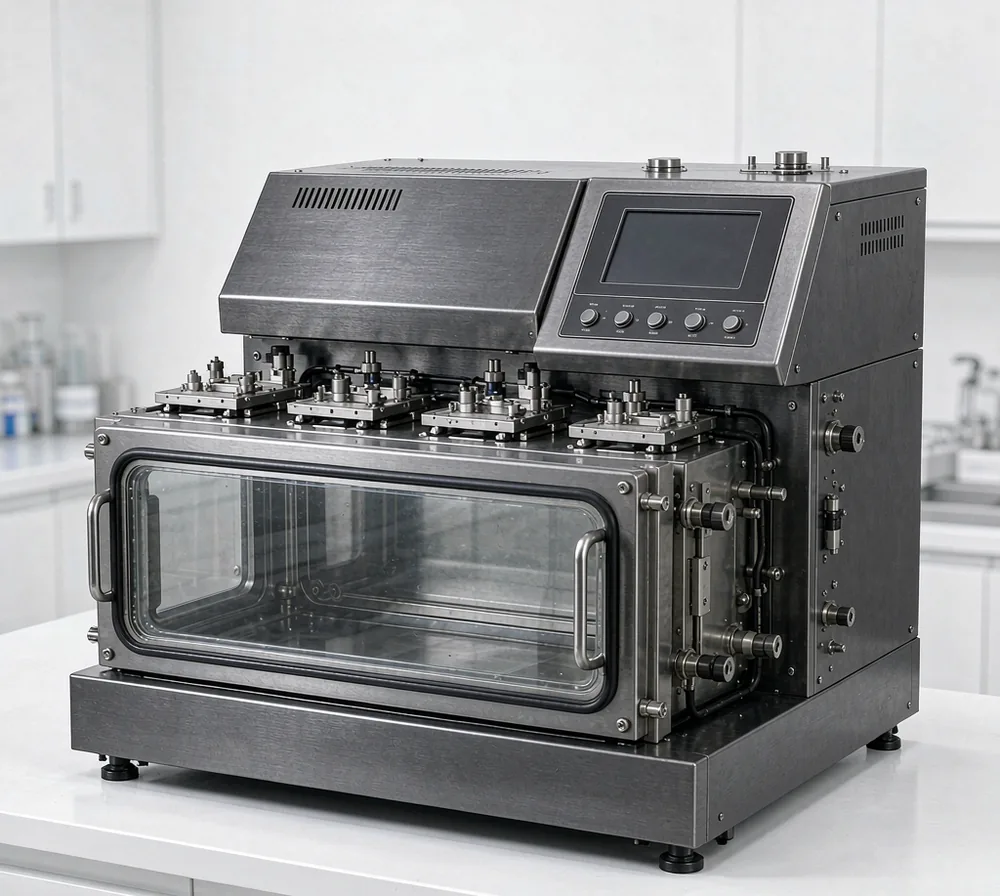
The MFT-600 is modular and portable — put it where the work is, and it can detect leak rates down to 2 µm depending on the package specification. The MFT-800 is the benchtop instrument for the QC laboratory, 19 kg net, with data memory over five years and Ethernet, USB and RS485 communication. The MFT-900, 32 kg net, is the workstation for QC and release testing at higher throughput. The MFT-1000 combines two decay methods in one instrument. All four are GMP-qualified with audit trails of five years or more.
One method set, three jobs
Because the result is a number against a documented limit, the same MFT can serve method development, in-process checks and lot release. One documented method set instead of three. Line clearance, in-process and release all read from the same instrument, in the same record format.
Frequently Asked Questions
What method do the MFT instruments use?
ASTM F2338 vacuum decay. The package is sealed into a test volume, the volume is brought to a set level, and the instrument converts the rate of pressure change into a quantified leak rate — a deterministic result against your acceptance limit, with no dye and no destruction.
Which MFT model should I choose?
The MFT-600 is modular and portable, placed where the work is. The MFT-800 (19 kg) is the benchtop instrument for the QC laboratory. The MFT-900 (32 kg) is the laboratory workstation for QC and release testing at higher throughput. The MFT-1000 combines two decay methods in one instrument. All are GMP-qualified with data memory and audit trails of five years or more.
Can the tested unit be shipped?
Yes. The test is non-destructive — the package you test is the package that goes on the line, and the result stays in the record.
How do the records leave the instrument?
Over Ethernet, USB and RS485 — the record leaves in the shape your LIMS or quality system wants, with retrieval by time across a five-year-plus audit trail.
Need a quote or technical advice?
Tell us your application — our U.S. team responds with product selection, documentation and pricing.
Request a Quote