Bubble Point Tester Manufacturer & Supplier
Bubble point testing for membrane filters — fast, non-destructive verification of sterilizing-grade filtration per USP <43> and EP 11.0.
Overview
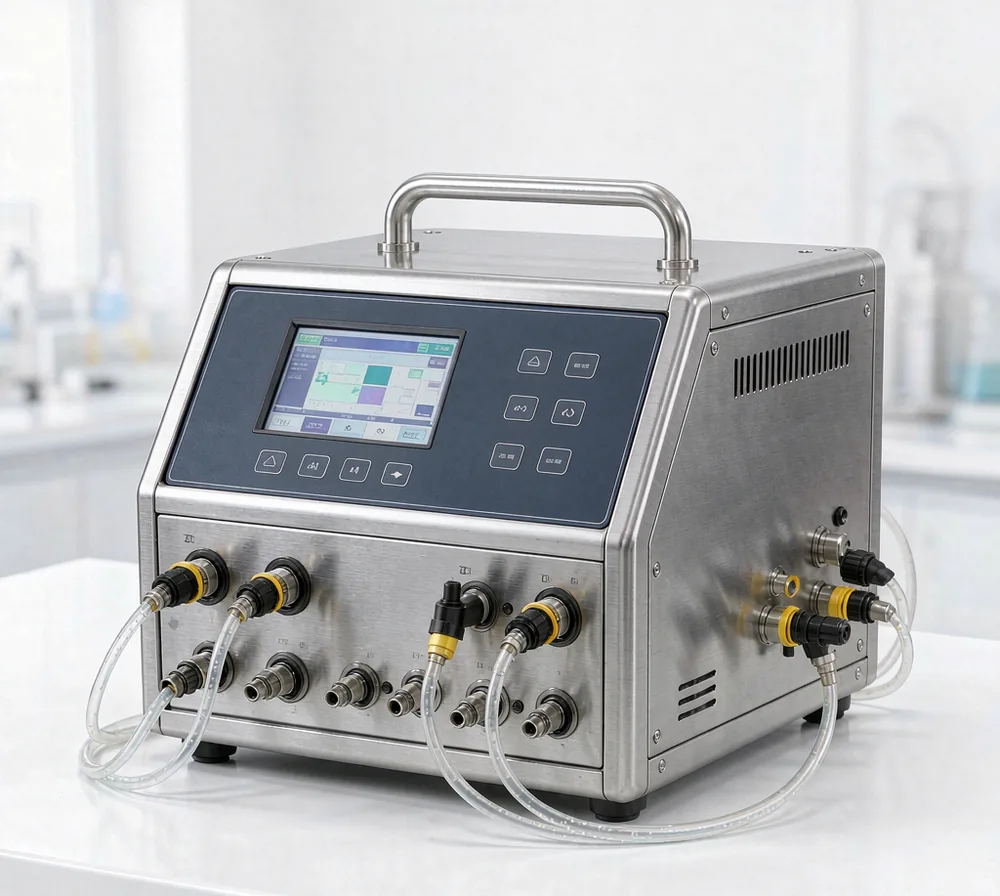
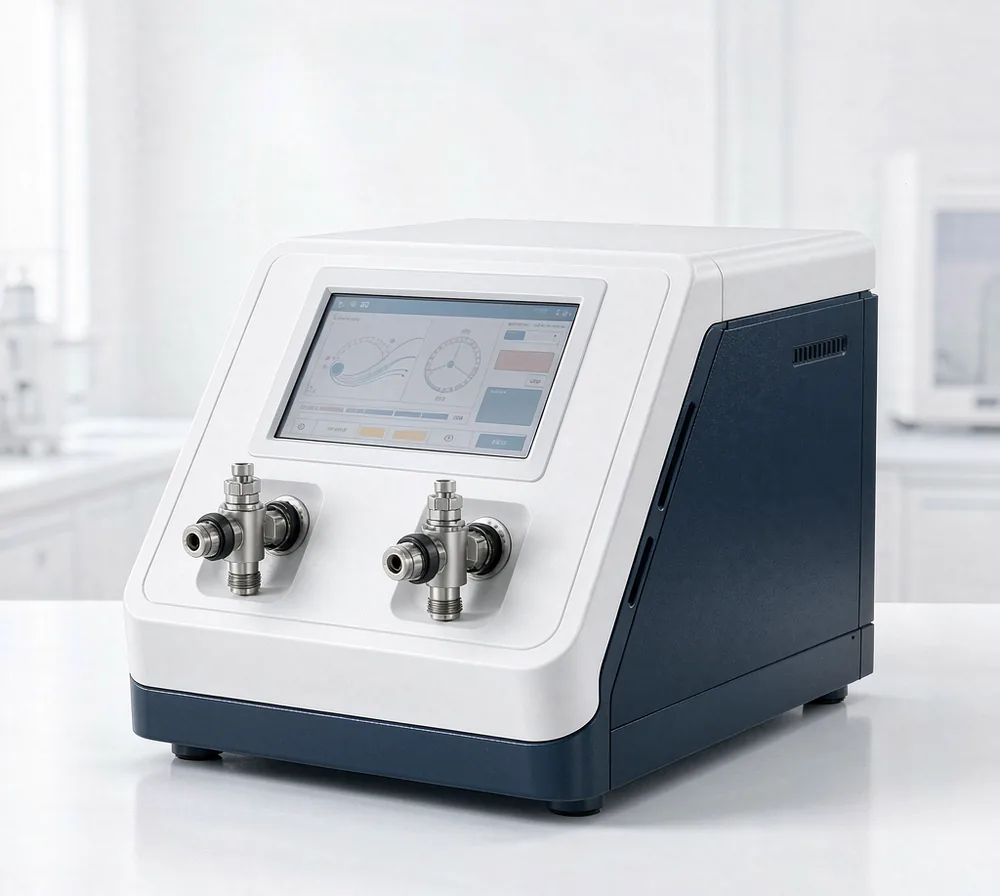
Manufacturer & U.S. supplier. MedIntegrity designs and builds the bubble point tester in its own factory — 28 patented products, 15 years in pharmaceutical testing equipment.
Where Bubble Point Tester Is Used
In-line fill checks
The fast, non-destructive first check on every wetted liquid filter — run on each fill, recorded, and comparable to the qualification data because it comes from the same instrument family.
Membrane qualification
Bubble point as the entry point of the integrity program: it establishes the membrane's largest pore, and the diffusive flow, dry bubble and pressure hold methods complete the picture.
Post-sterilization verification
The bubble point test is one of the non-destructive methods named by EU GMP Annex 1 for post-use confirmation — fast enough to run without holding the line.
Going Deeper
How Bubble Point Testing Works
The bubble point test measures the pressure at which the largest pore in a wetted membrane emits the first sustained stream of gas. It is fast, non-destructive and reproducible — the standard first check for wetted sterilizing-grade liquid filters.
Bubble Point vs Diffusive Flow vs Pressure Hold
Bubble point detects the largest pore; diffusive flow is sensitive to small-pore distribution and contamination; pressure hold monitors seal stability. A complete integrity test program typically combines methods for each fill and process step, and the Integtest series runs all of them on one instrument so the results are comparable.
Why It Matters for USP <43> & EP 11.0
Both pharmacopeias define acceptance criteria expressed as test pressure and flow limits derived from filter porosity. Instrument accuracy and electronic records are what make the result defensible at audit — the bubble point number is only as good as the trail that says when it was taken, by whom, and on which filter.
Where bubble point sits in the program
In practice the bubble point test is the quick in-line check: fast enough to run on every fill, sensitive enough to flag a membrane that has shifted. The slower methods — diffusive flow, dry bubble, pressure hold — cover the qualification and post-sterilization steps. Running all of them from one instrument is what keeps the whole program on one set of records.
Frequently Asked Questions
What does the bubble point test actually measure?
It measures the pressure at which the largest pore in a wetted membrane emits the first sustained stream of gas. That single number tells you the membrane's largest pore, which is what the acceptance criteria in USP <43> and EP 11.0 are built around.
Which MedIntegrity instruments perform bubble point testing?
The Integtest V6.5 and V8.0 — both run the full USP <43> / EP 11.0 method set, including bubble point, diffusive flow, dry bubble, pressure hold and vacuum decay, so the bubble point result is comparable to the rest of your integrity program.
Is the bubble point test destructive?
No. It is non-destructive and reproducible, which is why it is the standard first check — the filter that passes the test goes on to do its job.
Need a quote or technical advice?
Tell us your application — our U.S. team responds with product selection, documentation and pricing.
Request a Quote