MedIntegrity AIS-2.0 Manufacturer & Supplier
AIS-2.0 Autosampler for TOC Series
Overview
Designed and manufactured by MedIntegrity LLC — the TOC analyzer is built in our own factory, part of a 28-patent product line in pharmaceutical testing equipment.
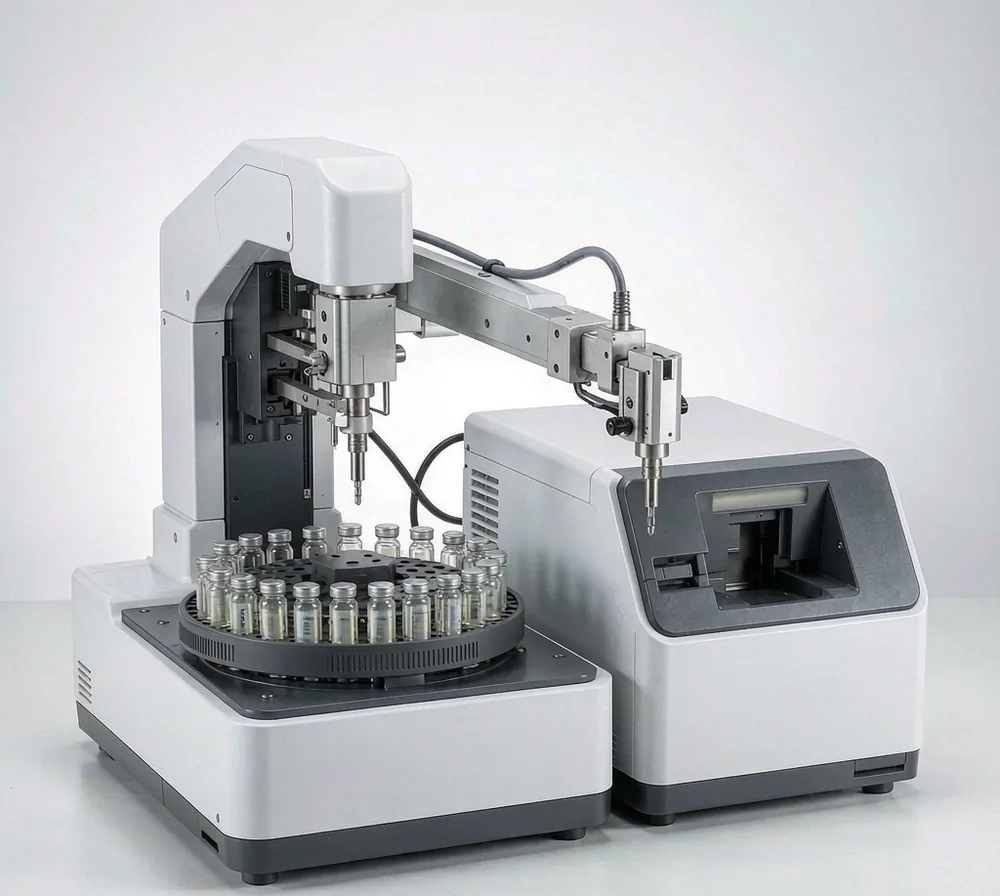
Combination with the TOC in a fully automatic measurement system. Measurement Method is Combination with the TOC The MedIntegrity AIS-2.0 Automatic Sampler provides dependable, fast, and precise injections for TOC analyzer systems. The modular design allows this autosampler to grow with your lab. Automatic sample vial tray allows longer unattended operation
Technical Specifications
| Weight | 8.6 Kg ( Net ) |
|---|---|
| Number of vials | 20 vials |
Specifications subject to change for improvement without notice. For the latest data sheet or technical questions, contact your MedIntegrity representative.
In practice, the AIS-2.0 keeps results as electronic records and supports qualification with the documentation we include. Send us your water matrix and we'll confirm the fit.
Technical Documentation
Notes From Our Technical Documentation
MedIntegrity AIS-2.0TOC Combination
Combination with the TOC in a fully automatic measurement system. THE OUTLOOK FOR THE AIS-2.0
How successful have MedIntegrity been in achieving efficiency targets in Integrity Test?
Measurement Method is Combination with the TOC Dimensions is 340 mm × 400 mm × 350 mm Weight is 8.6 Kg ( Net ) Number of vials is 20 vials
Technical Guide
What the autosampler adds to a TOC program
A TOC analyzer is only as consistent as the sampling that feeds it. Hand-injected samples bring a variable the instrument cannot fix: the human. The MedIntegrity AIS-2.0 automatic sampler removes that variable — dependable, fast and precise injections for the TOC analyzer it is combined with, so the result reflects the water and not the hand that held the vial.
The AIS-2.0 combines with the TOC analyzer in a fully automatic measurement system: the sample vial tray loads, the sampler runs the sequence, and the analyzer produces the results while the operator is doing something else. That is the difference between a water testing program that runs when someone is at the bench and one that runs on the schedule you set.
The 20-vial tray, and what it means for the routine
The sample vial tray holds 20 vials — the working set for a routine water testing program: the points on the distribution loop, the standards, the blanks, the brackets. The automatic vial tray is what allows longer unattended operation: a full set of points can run through the analyzer without an operator standing at the bench for the duration, which is the practical requirement for a water system that is sampled around the clock.
The modular design is the point of the product: the autosampler grows with the lab. Start with the tray and the analyzer, and when the program expands — more points, more frequencies — the same modular structure extends rather than being replaced. The sampler is the part of the water program that does not need to be redesigned every time the program does.
The record, unattended or not
Every run the autosampler executes is an electronic record on the analyzer: the sequence, the vial positions, the results, the time, the operator. For a water program that runs unattended, that record is what the auditor reads in place of the operator who was not at the bench — and it is structured the same way as a manually run set, so the program is one program with one record format, regardless of who (or what) ran the sequence.
The instrument is compact for what it does: 340 × 400 × 350 mm, 8.6 kg net. It sits next to the analyzer it serves, takes up the footprint of a small benchtop unit, and does the injection work that used to be the most variable part of the TOC routine.
What unattended operation changes about the program
A water system that is sampled around the clock does not wait for the bench to be free. The AIS-2.0's 20-vial tray — the points on the distribution loop, the standards, the blanks, the brackets — is what lets a full set run through the analyzer on the schedule you set, without an operator standing at the bench for the duration of the sequence. The program stops depending on when someone is available and starts running on when the system needs it, which is the position a 24-hour distribution loop actually requires.
The modular design is the other half: the autosampler grows with the lab. Start with the tray and the analyzer, and when the program expands — more points, more frequencies — the same modular structure extends rather than being replaced. The sampler is the part of the water program that does not need to be redesigned every time the program does.
The record when nobody is at the bench
For a water program that runs unattended, the record is what the auditor reads in place of the operator who was not at the bench. Every run the autosampler executes is an electronic record on the analyzer: the sequence, the vial positions, the results, the time, the operator. And because it is structured the same way as a manually run set, the program is one program with one record format, regardless of who — or what — ran the sequence.
That is the compliance shape of the instrument, sitting alongside the GAMP-aligned development and 21 CFR Part 11 support of the analyzers it feeds: the unattended result is as defensible as the attended one, because the record is the same kind of record. At 340 × 400 × 350 mm and 8.6 kg, it takes the footprint of a small benchtop unit next to the analyzer it serves, and does the injection work that used to be the most variable part of the TOC routine.
Where the autosampler sits in a qualified system
In a GAMP-aligned water program, the sampling path is part of the qualified system, and the AIS-2.0 is designed to sit inside that boundary rather than around it. Combined with the TA-series analyzer, it is a fully automatic measurement system: the tray loads, the sequence runs, the injections are dependable, fast and precise, and the results are generated whether or not someone is at the bench. The modular structure means the sampler can be added to an existing analyzer, extended as the program grows, and qualified alongside the instrument it serves.
The practical discipline the autosampler enforces is the one a water program needs: the same sequence, the same vial positions, the same results format, run after run, with the sequence, the positions and the results all recorded on the analyzer. For the distribution points, the standards, the blanks and the brackets on a 24-hour loop, that is the difference between a program that runs when the bench is free and one that runs on the schedule the system requires — with the unattended result as defensible as the attended one, because the record is the same kind of record either way.
The sequence is the procedure
A fully automatic measurement system only works if the sequence behaves like a written procedure: the same vial positions, the same order, the same standards and blanks bracketing the sample points, every run. On the AIS-2.0 that discipline is what the tray layout plus the analyzer's sequence definition gives you — the routine is defined once, and every unattended run executes the definition rather than a person's recollection of it.
The time basis is the other half of the discipline. When a water system's schedule says the loop is sampled at the distribution points on an interval, the sampler runs that interval whether or not the bench is occupied, and the record carries the sequence, the positions and the results in the order they happened. For an audit of an unattended program, that ordered record is the evidence that the schedule was kept, not an assumption that it was.
Frequently Asked Questions
What does the AIS-2.0 do?
It is an automatic sample vial tray and injection module that combines with the TA-series TOC analyzers in a fully automatic measurement system — dependable, fast, precise injections without a hand at the bench.
How many vials does the tray hold?
20 vials, per the specification — the working set for a routine water testing program: distribution points, standards, blanks and brackets.
What does 'unattended operation' mean in practice?
A full set of sample points runs through the analyzer on the schedule you set, without an operator at the bench for the duration of the sequence. The record is generated whether or not someone is watching.
What are the dimensions and weight?
340 × 400 × 350 mm, 8.6 kg net. It sits next to the analyzer it serves and takes the footprint of a small benchtop unit.
Which analyzers does it combine with?
The TA-series TOC analyzers (TA-2.0, TA-3.0 and the wider-range TA-100 / TA-200), in a fully automatic measurement system with a common record format.
Does the AIS-2.0 support the USP <43> three-stage determination of purified water?
See the specification table above for this model's applicability; we'll confirm fit for your water system.
Is it suitable for pharmaceutical water systems?
Yes — TOC analysis for pharmaceutical water and process water, from routine monitoring to system qualification.
Which pharmacopeial standards are covered?
USP, JP and ChP water-testing requirements, with model-by-model applicability listed in the specification table above.
Need a quote or technical advice?
Tell us your application — our U.S. team responds with product selection, documentation and pricing.
Request a Quote