MedIntegrity WRTP-1000 Manufacturer & Supplier
WRTP-1000
Overview
Designed and manufactured by MedIntegrity LLC — the RTP integrity tester is built in our own factory, part of a 28-patent product line in pharmaceutical testing equipment.
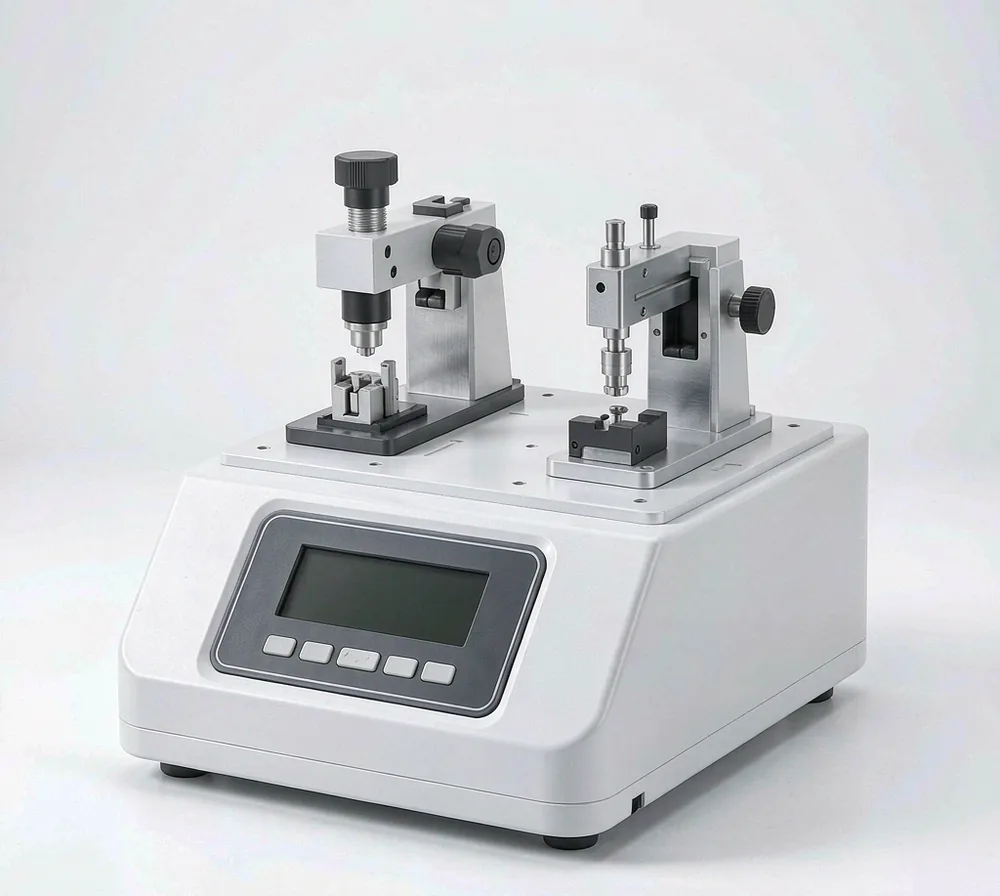
Rapid Transfer Ports do one job: move material into and out of isolators, RABS and cleanrooms without breaking sterility. In sterile production that happens constantly — every transfer is a potential contamination path, which is why the industry treats RTPs as critical components rather than convenient accessories. Integrity testing is the check that keeps this honest: it confirms the port maintains sterility during transfer, so its performance and compliance with regulatory requirements are proven, not assumed. The regulatory detail is in our technical notes below.
Technical Specifications
| Multiple diameter port | available.WRTP-1000 Terminal PC |
|---|
Specifications subject to change for improvement without notice. For the latest data sheet or technical questions, contact your MedIntegrity representative.
In practice, the WRTP-1000 fits into your aseptic line for routine integrity checks, saves records for the audit trail, and ships with qualification documentation. We'll coordinate it with your IQ / OQ / PQ program.
Technical Documentation
Notes From Our Technical Documentation
Why does RTP integrity testing matter to regulators? It is less optional than it looks. Under 21 CFR Part 211 (cGMP for Pharmaceuticals), equipment on the sterile line — and that includes transfer ports — has to be designed, installed and maintained so it prevents contamination. Routine integrity testing is how you prove it still does.
FDA's Guidance for Industry on Sterile Drug Products Produced by Aseptic Processing pushes the same point: integrity testing of RTPs is part of validating that sterility holds during material transfer. Not just before. During, every time.
In Europe the expectation is written right into EU GMP Annex 1. The revised Annex 1 (2022) leans harder on contamination control strategies — validating your RTP systems is part of that strategy now, not an add-on.
And the cleanroom around the port falls under ISO 14644 (Cleanrooms and Associated Controlled Environments). In practice: the port, its test record and the room it lives in all need to stand up to the same audit.
Technical Guide
What the integrity test verifies
A rapid transfer port does one job: move material in and out of an isolator, RAB or cleanroom without breaking the pressure relationship that keeps the area clean. The integrity test checks that job directly — the port's seal, its interlock behavior and its airflow performance through the transfer cycle, confirmed before the port is relied on and verified on the schedule your program defines afterward.
A pass means the port held its intended pressure relationship during the test cycle: the seal was intact, the transfer path behaved as designed, and the area on both sides of the transfer kept its state. A fail means one of those is not true, and the port is out of service until the cause is found. That is the difference between assuming the barrier works and demonstrating that it does.
Multi-diameter, one test program
Ports come in different diameters across the lines on one site, and the WRTP-1000 is offered with multiple diameter ports available — the instrument program covers the diameters you actually run. When the program is defined once per port type, the routine test is the same routine whether the port is on the filling suite or the compounding line.
Operation runs with a terminal PC for program setup and record review. The records are electronic, kept for the audit trail, and retrievable by the campaign window — the same shape as the rest of your barrier-system documentation.
Fitting the test into the maintenance program
The regulatory position on sterile-line equipment — 21 CFR Part 211, FDA's aseptic processing guidance, EU GMP Annex 1 — is that the equipment must be designed, installed and maintained to prevent contamination, and that regular integrity testing is how you prove it still does. In practice that lands as a schedule: at commissioning, after any repair or replacement of the port, and on the periodic interval your SOP defines.
Because the test is routine and the record is electronic, it slots into the preventative maintenance program of the barrier system rather than competing with production. The port, its test record and the cleanroom it serves (ISO 14644) all need to stand up to the same audit — the WRTP-1000's record is the piece of that set that proves the port.
What the integrity test checks during a transfer
A rapid transfer port is a controlled opening in the boundary that keeps a room clean. During a transfer it moves material in and out while the area on both sides has to hold its intended pressure relationship. The integrity test checks exactly that job: the seal integrity of the port, the behavior of its interlocks, and the airflow performance across the transfer cycle, so that a pass means the port did the job it is supposed to do rather than merely looking like it did.
The value of testing before the port is relied on is that the failure is caught while it is still a fixable port problem, not a contamination event discovered downstream. The multiple diameter ports available on the WRTP-1000 mean the program can cover the different port sizes actually on a line, and the terminal PC is where the programs are set and the records reviewed, so the configuration of each test travels with the record that proves it.
What the record has to show you
In an audit, an RTP is reviewed the way the rest of the barrier system is reviewed: the port, its test records and the cleanroom it serves are read together, and all three have to stand up in the same document set. The WRTP-1000's electronic test records are the piece that carries the port's side of that review, structured so that a campaign window can be pulled as a search rather than reconstructed from separate logs.
The schedule that keeps the record current is the one your quality risk management sets: a test at commissioning, a test after any repair or replacement of the port, and a periodic interval that your SOP defines. 21 CFR Part 211 and EU GMP Annex 1 both put regular integrity testing of sterile-line equipment in the requirement, with the evidence in the record. Because the WRTP-1000's record is electronic and retrievable by campaign, the routine test is the same routine whether the port is on the filling suite or the compounding line.
Setting up the first test campaign
The first run on a port is the one that sets the baseline everything else is compared against. During the commissioning test, the program is defined to the port's specification on the terminal PC, the test cycle is executed, and the record is saved as the reference the periodic tests will be judged against. After that, the routine is the same routine every time: the same program, the same cycle, the same electronic record format, so a later result is comparable to the first one without anyone having to remember how the baseline was set up.
When the port changes — a new diameter, a repaired seal, a replaced interlock component — the test program follows the port, and a fresh record is added to the campaign's trail. The IQ/OQ/PQ documentation that comes with the delivery is built for exactly this sequence: the instrument is qualified, the port programs are set, and the records begin. From then on, the WRTP-1000's job is to keep demonstrating that the port does what it is supposed to do, and to keep the proof of it in one retrievable place.
Frequently Asked Questions
Which ports can it test?
Multiple diameter ports are available. Tell us the diameters of the rapid transfer ports on your lines and we will confirm the fit for each.
What does a pass mean?
The port maintained its intended pressure relationship through the test cycle — the seal held and the transfer path performed as designed during the transfer.
Where does the data go?
Electronic test records, reviewed and managed with the terminal PC, retained for the audit trail and retrievable by campaign or time window.
How often should we test?
At commissioning, after any repair or replacement, and on the periodic interval your quality risk management and SOP define — the regulatory frameworks (21 CFR Part 211, EU GMP Annex 1) require regular integrity testing as evidence.
Is qualification documentation included?
Yes — IQ/OQ/PQ documentation is part of the delivery, aligned with GMP validation practice, so the instrument slots into your existing qualification program.
What does RTP integrity testing cover on our instruments?
Integrity testing for aseptic pharma production lines, with results saved as electronic records.
Is qualification documentation included?
Yes — IQ / OQ / PQ documentation is part of the delivery, aligned with GMP validation practice.
Can it fit into an existing qualification program?
Yes. The instrument and its documentation are built to slot into an existing IQ / OQ / PQ program; we'll coordinate the details with your team.
Need a quote or technical advice?
Tell us your application — our U.S. team responds with product selection, documentation and pricing.
Request a Quote