MedIntegrity BGT-5000 Manufacturer & Supplier
BGT-5000 Multi-channels Single-use Bag Leak Tester
Overview
Designed and manufactured by MedIntegrity LLC — the bag integrity tester is built in our own factory, part of a 28-patent product line in pharmaceutical testing equipment.
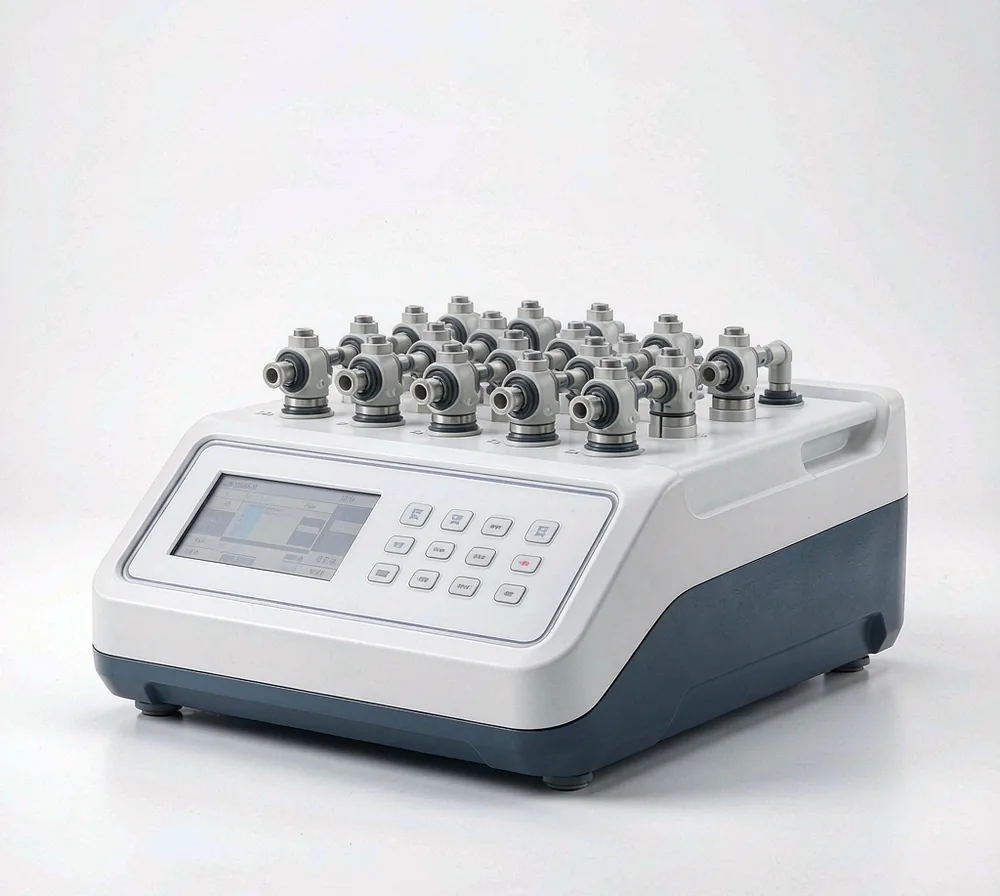
1. Core Technology Overview & Opening Notice MedIntegrity SUS Integrity Testing Technology Ensure the Safety and Quality of Single-Use Bag Integrity Testing MedIntegrity BGT-5000 Multi-channels Single-use Bag Integrity Testing system use pressure decay methods to deliver highly accurate results. With the ability to detect leaks of just a few microns, these systems produce quantitative results for long-term trend analysis and data traceability. 2. MedIntegrity Ensuring the Integrity of Single-Use Containers
Technical Specifications
Full specification sheet available on request — contact us.
Specifications subject to change for improvement without notice. For the latest data sheet or technical questions, contact your MedIntegrity representative.
In practice, the BGT-5000 uses pressure decay to find leaks in fluid bags and pouches and keeps electronic records for both manufacturing and QC use. Send us your bag format and we'll confirm the fit.
Technical Documentation
Technical Guide
Single-use bags: the sterile barrier you cannot see
A single-use bag is a sterile barrier in the same sense as a vial or a prefilled syringe: it holds product against the environment, and the integrity of that barrier is part of the product's quality story. In biopharmaceutical manufacturing, where the bag carries the bulk of the product through blending, storage and fill, a leak that is missed at the plant becomes a product risk at the use site — so the industry tests bags the same way it tests any sterile barrier, with a defined method and a documented result.
The MedIntegrity BGT-5000 multi-channel single-use bag integrity testing system uses the pressure decay method: the bag is connected to a closed test volume, the pressure is set, and the instrument watches what happens to it. An intact bag holds. A leak — even one only a few microns across — lets the pressure change at a measurable rate, and the instrument converts that rate into a quantitative leak reading.
The quantitative result is what makes the test useful beyond a single pass/fail decision. You can trend a bag lot over time, compare a supplier change, or watch a new bag design across development campaigns — long-term trend analysis and data traceability are built into the method, not bolted on afterward.
Why multi-channel changes the workflow
Bag testing has traditionally been slow because the instrument can only watch one bag at a time, and a production lot is hundreds of bags. The BGT-5000 runs multiple channels in parallel: several bags are connected and tested in the same cycle, so a full lot check takes a fraction of the time the single-channel approach needs, and the throughput scales with the lot size instead of against it.
For a bag manufacturer, that is the difference between a sampling program and a 100% inspection program. For a biopharma site receiving bags, it is the difference between testing enough bags to feel confident and testing every bag that will carry product.
The results are stored as electronic records on the instrument — each channel, each bag, each result, with operator and timestamp — in the shape your quality system expects. The record is the audit trail, and it is there from the first run.
Where the test sits in the bag's life
Bag integrity testing applies at several points in the product's life, not just at the end. At the bag manufacturer's side: sealing validation, in-process checks during production, and lot release before the bags ship. At the biopharma site's side: incoming verification, and checks at the critical stage of fluid filling, where a bag that has been damaged in handling or placement is still in play before product goes into it.
The BGT-5000 covers the pressure decay side of those checks. The method is non-destructive in the sense that the test itself does not damage the bag's barrier — the bag can be dispositioned on the result rather than destroyed by the test, which matters when the bag is expensive and the lot is small.
Because the system is quantitative, acceptance limits are set from the method development work — a leak rate threshold that your validation defines — and every subsequent test is a pass or fail against that documented criterion. The instrument does not interpret the result for you; your procedure does, and the instrument gives you the number to interpret.
What the quantitative leak rate is for
A pass/fail result is a decision; a leak rate is a data set. The BGT-5000's quantitative output is what turns a lot inspection into a program: you can trend the same bag format across lots and see whether the sealing process is holding, you can compare two suppliers on the same number, and you can watch a new bag design across development campaigns and know when it reaches the level of the one it is replacing. That is the difference between testing bags and managing bag integrity.
The multi-channel design is what makes the program practical at production scale. A lot of hundreds of bags tested one at a time is a schedule problem; the same lot across parallel channels is a routine check. The electronic record captures each channel, each bag, each result with operator and timestamp, so the record grows with the lot instead of competing with the line for time.
Incoming verification at the biopharma site
A bag's manufacturing record covers the factory, not the road. Handling, placement and the last steps before product goes into the bag are a window the supplier's data does not cover, and for a biopharmaceutical manufacturer that window sits exactly at the critical stage of fluid filling. Incoming verification on the BGT-5000 puts a measurable check on that window: the bags that arrive are the bags that get tested, and the bags that pass are the bags that carry product.
Because the result is a quantitative leak rate against an acceptance limit your validation defines, the routine is repeatable — same method, same limit, same instrument, run after run. The record is electronic and structured for traceability, which is what the regulatory expectation for bag integrity at the fill stage actually asks for: not an impression, a number with a limit behind it.
Sealing validation where the data must hold
Sealing validation is the point where bag integrity data has to hold up to the standard it was set to govern. The BGT-5000's quantitative leak readings, captured channel by channel across a validation lot, are the evidence: the distribution of results across the lot, the relationship between the sealing parameters and the leak rate, and the acceptance limit that the routine program will run against. When the same instrument later runs the in-process checks and the lot release, every one of those results is comparable to the validation data, because they are the same method measured the same way.
The multi-channel design keeps validation practical at lot scale: a validation lot is not a few bags, it is a representative set of the production, and the parallel channels are what let the full set be tested in one campaign rather than across several weeks. The electronic record stores each channel, each bag and each result with operator and timestamp, so the validation report and the routine program read from the same record format. That is the position a bag integrity program needs to be in for an audit: one method, one limit, one trail of numbers from sealing through release to the fill.
Frequently Asked Questions
What method does the BGT-5000 use?
Pressure decay: the bag is connected to a closed test volume, the pressure is set, and the instrument quantifies the rate of pressure change — an intact bag holds, a leak produces a measurable decay.
How small a leak can it detect?
Leaks of just a few microns, per the specification. The actual detection limit for a specific bag format is established during method development, and the result is quantitative — a leak rate, not a guess.
How many bags can it test at once?
Multiple channels in parallel — several bags tested in the same cycle, so lot inspection scales with throughput instead of against it. Confirm the channel count for your bag size with our team.
Where is it used?
Bag manufacturers (sealing validation, in-process, lot release) and biopharma sites (incoming verification, and the critical stage of fluid filling before product goes into the bag).
What happens to the data?
Electronic records on the instrument — each bag, each result, operator and timestamp — structured for your quality system and available for long-term trend analysis and traceability.
Which method does the BGT-5000 use?
Pressure-decay leak detection for fluid bags and pouches.
Is it suitable for both manufacturing and QC?
Yes — the BGT family is used for pharmaceutical bag manufacturing and QC, with electronic records.
How do I choose among the BGT models?
Tell us your bag format and testing volume and we'll recommend the right model from the BGT family.
Need a quote or technical advice?
Tell us your application — our U.S. team responds with product selection, documentation and pricing.
Request a Quote